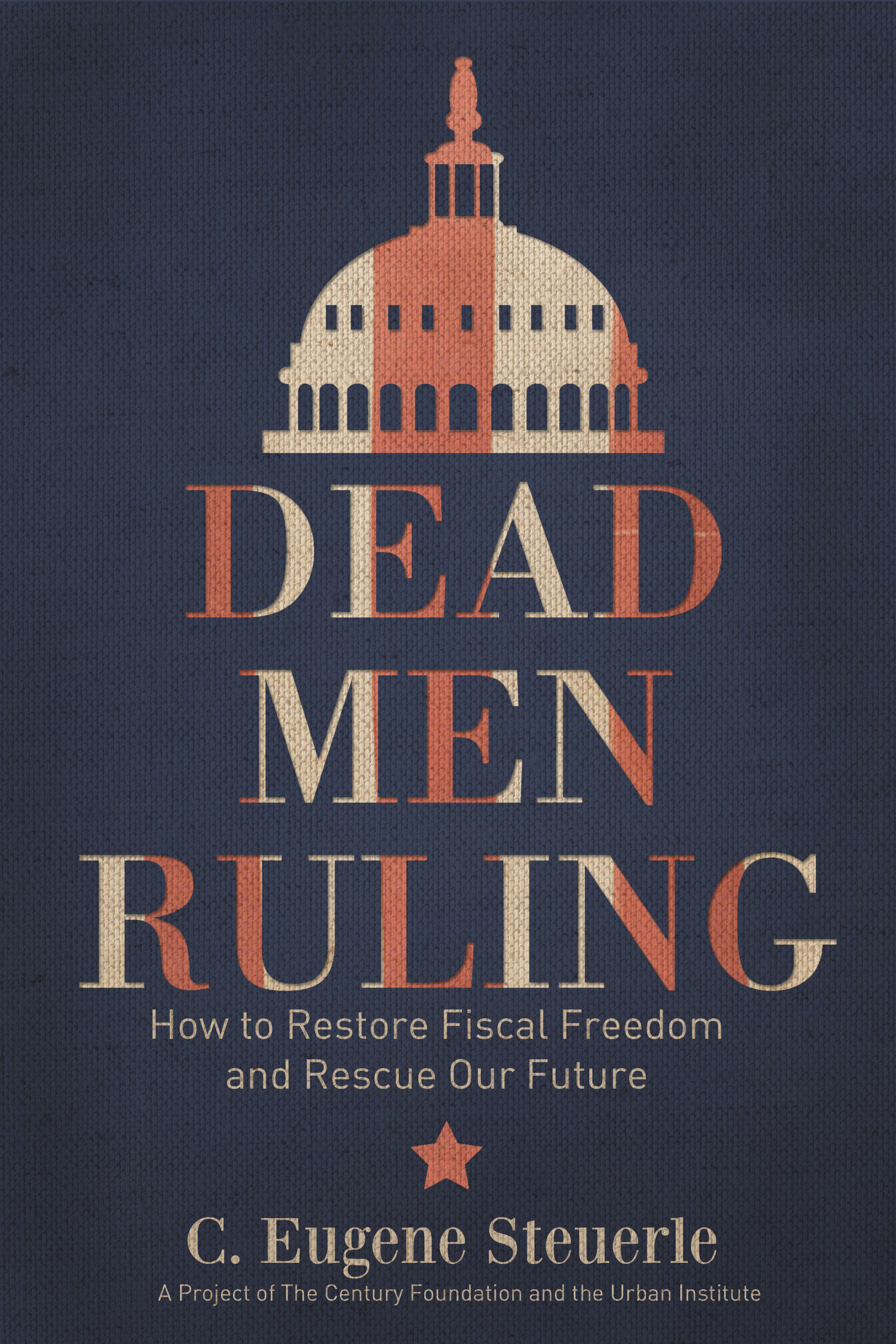
Austerity, Stimulus, and Hidden Agendas

Nothing better exemplifies our gridlock over the future of 21st century government, as well as how to recover from the Great Recession, than the false dichotomy of austerity versus stimulus.

The austerity thesis, reduced to its simplest form, suggests that government has been living beyond its means for some time, only exacerbated by the actions that accompanied the recent economic downturn. Sequesters, tax increases, and spending cuts become the order of the day.

The stimulus hypothesis, reduced also to simplest form, suggests that more government spending and lower taxes puts money in people’s pockets and helps cure a country’s economic doldrums. Once the economy is doing better, government spending will naturally fall and taxes rise.

The debate then plays out largely over deficits: do you want larger or smaller ones? But reduced to this form, the debate is a fallacy, for several reasons. Continue reading

Our Imperfect Work

“We must act, knowing that our work will be imperfect,” Barack Obama proclaimed in his second inaugural address. Interestingly, the Washington Post blazoned its front page with the first three words without noting the succeeding dependent clause. Yet within this clause, I believe, lies the means by which the president—and Congress—and we—can move past so many of our conflicts and face up to the problems that confront us. The solution lies not in acting, but in recognizing the imperfection of what we do. If our budgets are to be vehicles for change, then we cannot enact so many laws as if the priorities of one time and place must endure forever. Continue reading

The Decline of Fiscal Democracy in America: A New Video Series by Eugene Steuerle

On January 3, 2013, the 113th session of the U.S. Congress opened with a fiscal cliff averted, but a country still stuck in a less-recognized fiscal bind.

In the first video of a three-part series, Urban Institute Fellow Eugene Steuerle, a former deputy assistant secretary of the Treasury for tax analysis and cofounder of the Urban-Brookings Tax Policy Center, explores one of the major reasons recent Congresses have been so dysfunctional: all, or almost all, the revenue to be collected by the Treasury Department was spent before lawmakers walked in the door. Continue reading

The Budget Crunch for Children—An Update

The Urban Institute recently released Kids’ Share 2012: Report on Federal Expenditures on Children through 2011, by Julia Isaacs, Katherine Toran, Heather Hahn, Karina Fortuny, and myself. It looks comprehensively at trends in federal spending and tax expenditures on children over the past 50 years. This sixth annual report is well worth a look if you are at all interested in how children fare in the federal budget. Continue reading

Fiscal Democracy Index: An Update

Eugene Steuerle and his colleague, Tim Roeper, have developed a “fiscal democracy index” to document the fall in the fiscal freedom of our policymakers in recent years and into the future. To calculate the index, Steuerle and Roeper measured the extent to which past and future projected revenues are already claimed by the permanent programs already in place (including interest payments on the debt). Continue reading

Why Economic Growth Isn’t Enough

Today’s budget problems aren’t America’s first. High debt levels accompanied our major wars, but they were quickly reduced soon after. “Deficits as far as the eye can see” in the mid-1980s were followed briefly by surpluses in the late 1990s. In all these cases, economic growth helped solve the problem. Today, that’s no longer possible.

Failure to understand the causes of today’s historic impasse will stymie those budget reformers tempted to believe we can use the traditional pro-growth strategy to get our fiscal house in order. Most of history is on their side: in almost all past U.S. budgets—indeed, the budgets of most nations—revenues were scheduled to grow automatically along with the economy, and expenditures were scheduled to grow only if there was new legislation. Thus, revenues in some future year would always exceed that past expense, no matter how high any current deficit. But under the laws now dominating the budget, expenditures essentially are or will be growing faster than both revenues and the rest of the economy. In fact, we’re now locked into automatic expenditure hikes that will outstrip revenues under almost any conceivable rate of economic growth. Continue reading

Broken Government

The Obama Administration faces not one but several dilemmas. First is the huge issue of preventing the current downturn from turning into a very deep and long-lasting worldwide recession. State governors are running to Washington for help with their own budget crises, while Democratic supporters are clamoring for the spending increases and tax cuts they were promised during the campaign. Unfortunately, the long-term federal budget is so unbalanced that even if the nation were experiencing good times, able to avoid more tax cuts or spending increases, and in a position to enact the types of budget reforms that President Clinton did in 1993, it would still be way behind the fiscal eight-ball. Continue reading

The Third Fiscal Turning

To do what must be done for the nation, and then to finance it. At its core, that’s what government fiscal policy is all about. A “fiscal turning” happens when the old ways of doing things obstruct vital government reforms, and new ways—a new paradigm—must be found.

The United States is facing its third major fiscal turning. Continue reading